A style name can help you find a starting point
Words such as Japanese, traditional, fine line or blackwork can help you begin exploring tattooing. They draw attention to different things: an artistic tradition, a way of working with line, or the use of black ink. They leave plenty of room for individual decisions.
Think of handwriting. Two people can write the same word with the same pen and leave very different marks. In tattooing, the subject and the tools are only part of what you see. The way an artist draws, simplifies, combines and places things is part of the work too.
An individual signature grows through decisions
Over years of drawing and tattooing, an artist returns to certain forms and gradually changes them. A curve becomes simpler. A familiar motif loses some details and gains others. The gaps between shapes begin to matter as much as the shapes themselves. Particular rhythms, structures or kinds of humour keep appearing.
That repetition can develop into a personal visual language. It reaches beyond a list of recurring motifs: you may recognise the same approach in an animal, a room and a largely abstract composition. The connection is the person making the decisions.
For us, developing this language is an important part of being an artist. It means refining an expression that feels our own, allowing it to move beyond familiar conventions and the pressure to match a current trend. It can keep changing as we learn, without losing the thread that connects the work.
Valentin: influences become something personal
Valentin’s work includes Japanese influences, architecture and imagined spaces. Those descriptions tell you something about its ingredients. His particular way of rearranging forms, returning to certain elements and moving between recognisable scenes and abstraction is what makes them his.
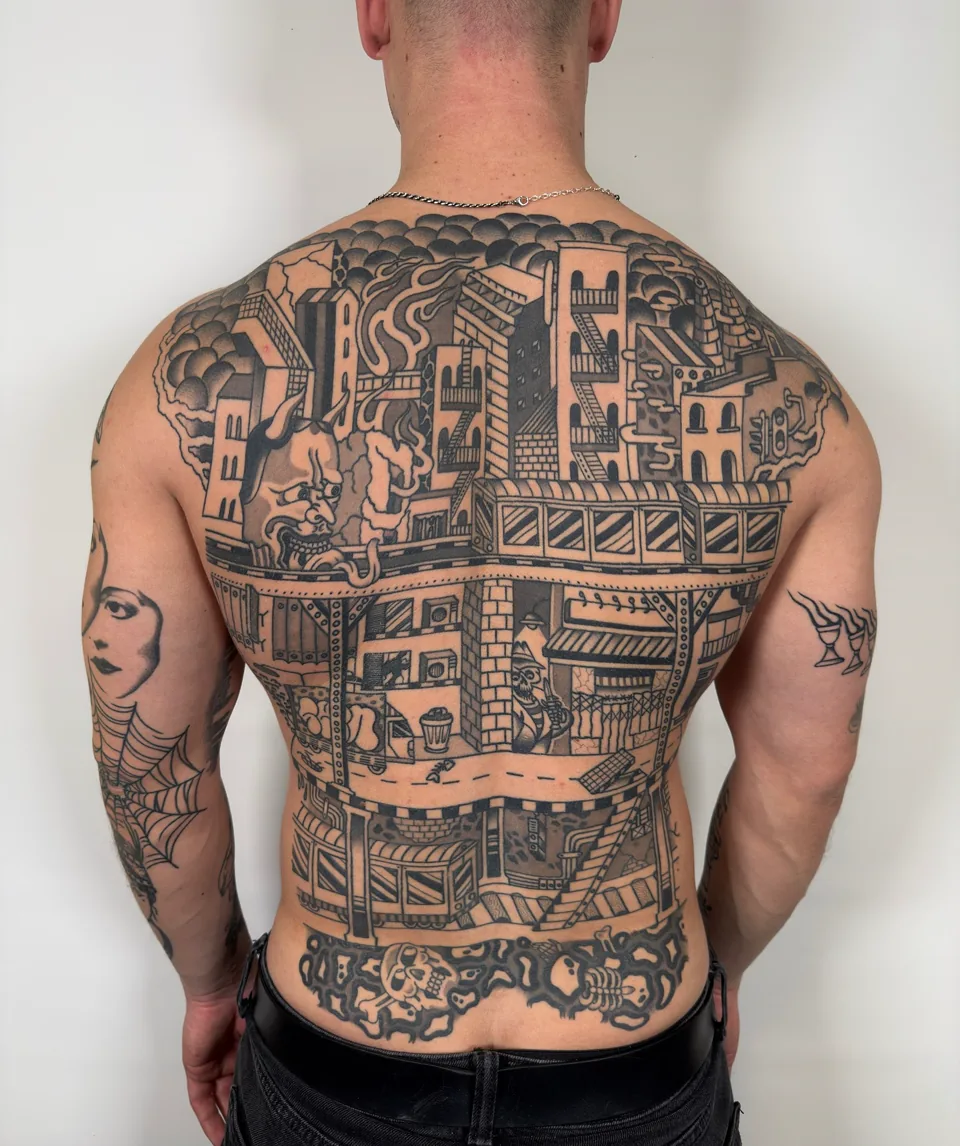
In the backpiece shown here, rooms, buildings and a train become one connected composition. Elsewhere, a figure or an architectural fragment can become much more simplified or abstract. Calling all of this “architectural tattooing” would leave much of that personal expression undescribed.
This is why “Valentin’s style” can be a precise answer. It points to a body of work developed over time, including the relationships between images that might fall into different categories. You can get to know that language by looking through the portfolio.
Jekie and Lil Dich: other individual languages
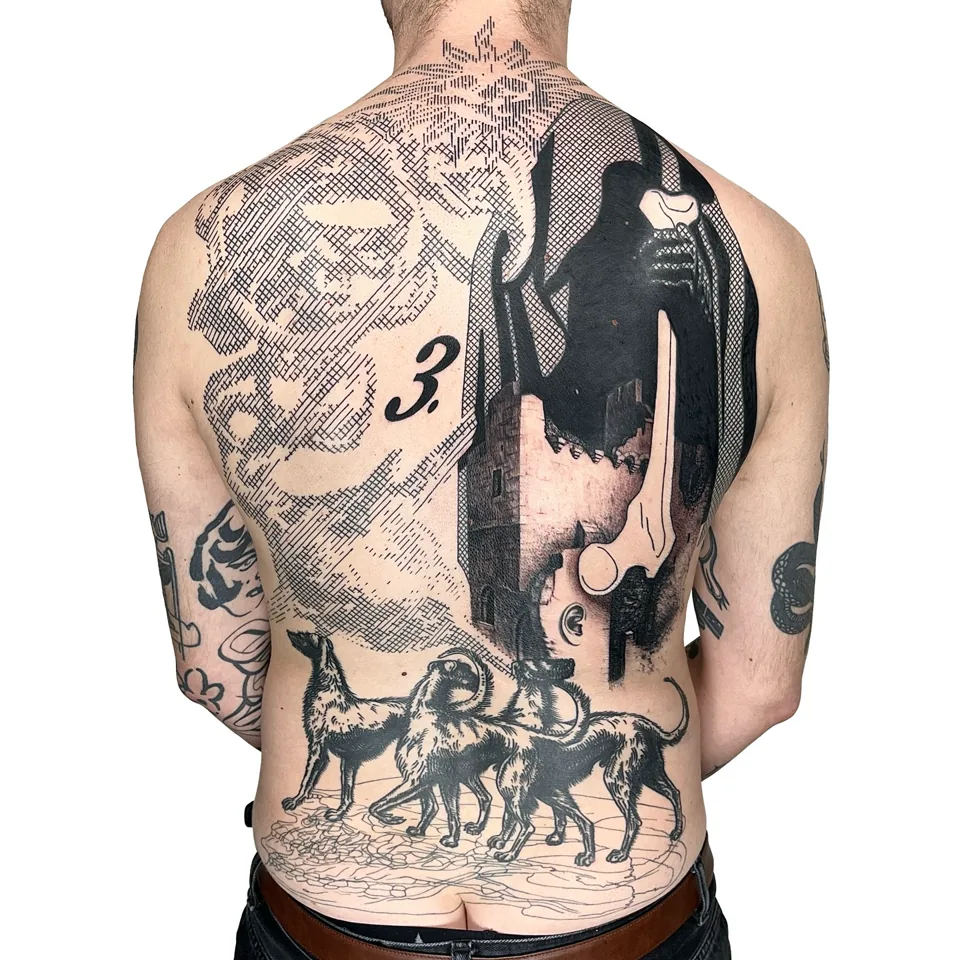
With Jekie, mystical imagery, post-internet influences and contrasting structures offer useful entry points. In the backpiece pictured below, fine repeated marks sit beside dense dark passages and animal figures. Their arrangement gives the work its particular atmosphere. A broad label such as blackwork describes only part of what is happening.
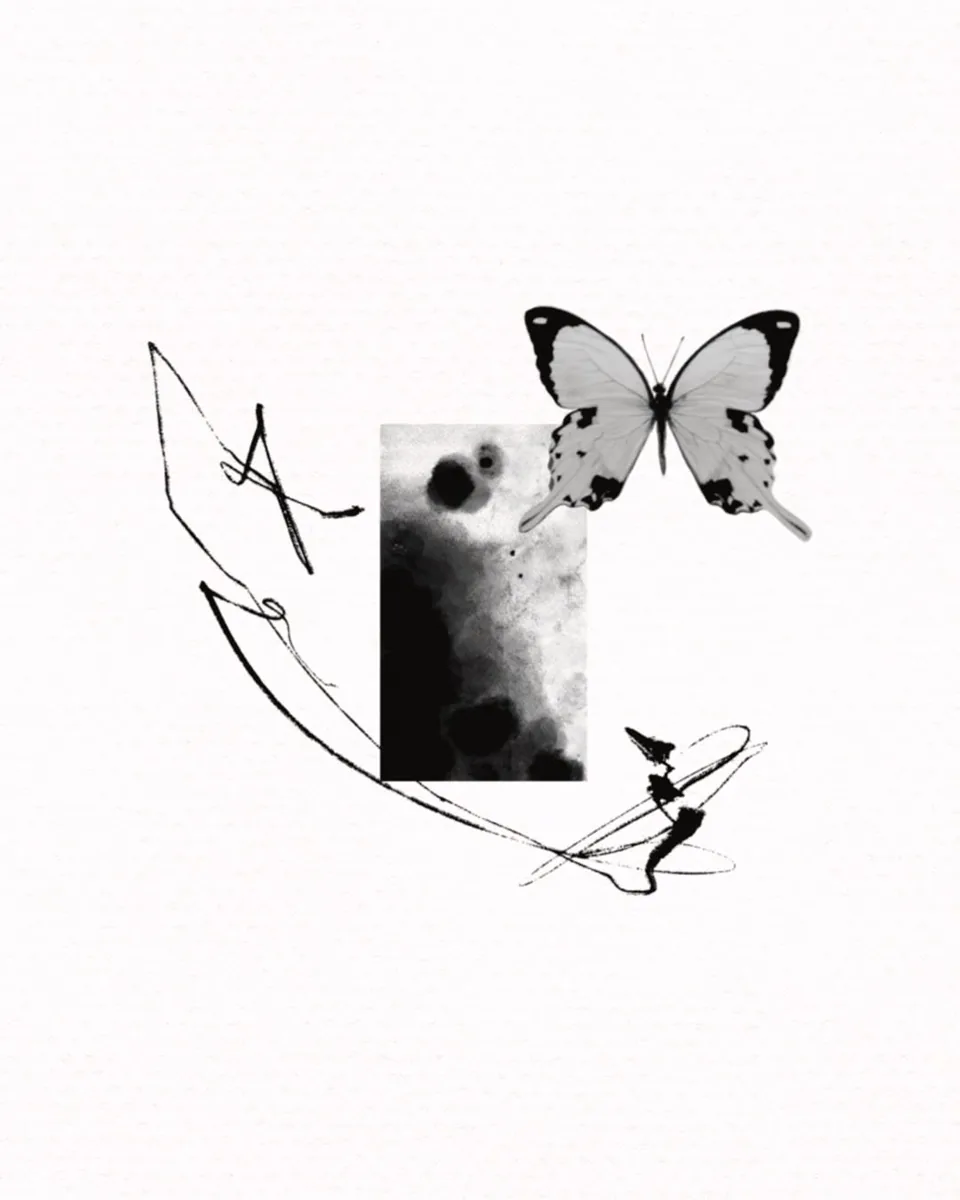
Lil Dich’s work brings together painterly references, artistic imagery and abstraction. The drawing below, made collaboratively with Zori, places a butterfly alongside a shaded rectangular form and sweeping gestural marks. It is a shared design, credited to both artists, rather than a finished tattoo. It also shows how different kinds of imagery can coexist within a composition.
With both artists, a portfolio communicates more than adding extra words to a style label. The particular choices, relationships and recurring interests are what you are responding to.
What gets lost when a label becomes the whole description?
If a personal body of work is reduced to one category, years of experimentation and refinement can disappear from the description. The category may be accurate in one respect while saying very little about the artist’s contribution. It can make very different practices sound interchangeable.
An individual voice can also develop within a tradition. Working with an established visual language leaves room for personal expression, and moving beyond a category does not automatically make a tattoo better. At The Chamber, we value the care, authorship and conviction in the work. Style names help visitors find their bearings; the portfolios show the individual artists.
You can choose an artist before you can name the style
Look through several pieces by the same artist. What draws you back: the movement, the atmosphere, the balance of detail and open space, or the way recognisable forms become abstract? Notice whether you enjoy the artist’s approach across different subjects.
You can write something as simple as: “I love the spaces and shapes in these three tattoos. I would like to explore a similar feeling for my idea.” Add the placement and approximate size. That gives the artist something useful to respond to, even if you have no style name and no finished design.
Our style catalogue and guide to the studio’s specialisations are starting points. Follow them into the individual portfolios and choose the work that speaks to you. You are welcome to bring questions, preferences and your own story into that conversation.
So, what do you call this style? Sometimes the clearest answer is simply: it is the artist’s own style.